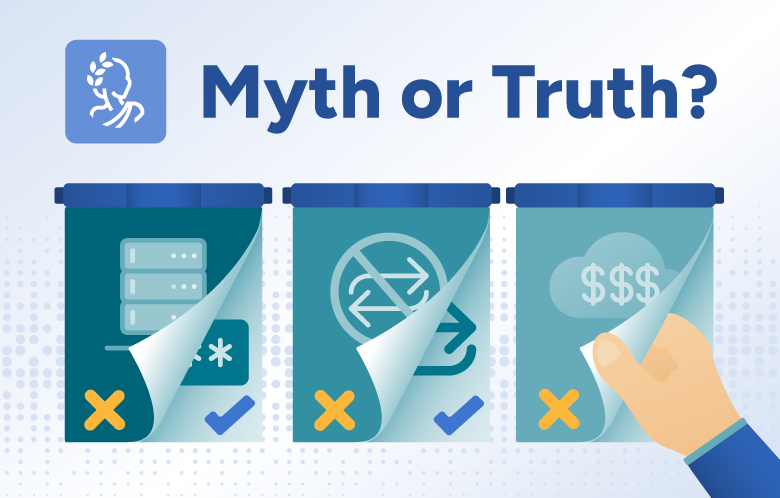
What you'll learn:
- What myths surround the authentication landscape
- Current issues with IP/Proxy access
- Why SAML is a better authentication solution
Librarians are at the heart of enabling access to knowledge, but authentication can feel like a maze of complex systems, technical jargon and frustrating user experiences. OpenAthens believes it doesn't have to be that way.
We're going to debunk the most common myths about authentication and show how OpenAthens helps libraries deliver secure, seamless and user-friendly access to digital resources without the complexity. Whether you're still relying on IP or proxy-based access or just starting to explore federated authentication, we're here to help you take control, protect your users, and prove your library's impact.
Is IP/Proxy Authentication Still Secure for Libraries?
Before exploring individual myths, it’s important to understand why many libraries are re-evaluating IP and proxy access. These methods were designed for a different era and often pose security, privacy and usability issues — especially as remote research expands.
Now, let’s get myth-busting!
Myth: “OpenAthens is expensive because it is cloud-based.”
Truth: Cloud-based services offer both financial and operational advantages.
This misconception stems from a misunderstanding of what cloud-based solutions actually provide. Modern SAML-based authentication platforms can reduce the cost and complexity associated with managing local infrastructure. Here are just a few of the benefits:
- Predictable subscription pricing with no hidden costs
- Savings on energy, space, and staff time
- Automatic security patches and feature updates — no downtime or extra costs
- Effortless handling of traffic spikes with load scaling
- Scalable access for more users or resources without new infrastructure
Myth: “Proxy authentication is the easiest and safest way to manage access.”
Truth: IP and proxy-based access are limiting and outdated.
With OpenAthens, you can offer remote, secure and seamless access — no VPNs, proxies, or static IP headaches. Users log in once with their institutional credentials and get what they need, wherever they are. OpenAthens protects user identity and data by supporting privacy-first access using SAML. You control what information is shared with publishers, keeping users safe and ensuring your institution is compliant.
Therefore, for libraries inquiring whether proxy authentication remains secure, the reality is that IP-based systems lack the modern safeguards, granular controls and privacy protections that SAML provides.
Myth: “Only IT cares about authentication.”
Truth: Authentication is a strategic library service.
You’re not just providing access; you’re enabling meaningful research and discovery. OpenAthens helps you deliver a better user experience while aligning with institutional goals.
And since authentication sits at the intersection of access, analytics, and user experience, SAML SSO enables libraries to show measurable impact and simplify access to digital resources.
Myth: “Authentication systems are too technically complex for library teams.”
Truth: OpenAthens is designed to provide you with clear, actionable insights.
The intuitive admin dashboard puts you in control. Manage resources, configure access rules, and generate usage reports by department, user group, or platform with just a few clicks. You can then use the data to inform purchasing decisions, demonstrate the impact of your library and advocate for its resources.
This makes federated authentication more approachable for library teams who want greater visibility without relying heavily on IT.
Myth: “OpenAthens doesn’t integrate with local services.”
Truth: OpenAthens seamlessly integrates with multiple local directory systems, including Azure/Entra, Okta, and Shibboleth, among others.
We support a variety of integration methods, including SAML, OIDC and LDAP, and offer a REST-based API for those who want to develop a custom integration. This flexibility ensures libraries can adopt SAML single sign-on without restructuring their existing identity environment.
Why SAML Single Sign-On Is Becoming the Preferred Choice for Libraries
As authentication needs evolve, more libraries are moving away from IP and proxy-based access. SAML and federated authentication offer stronger security, enhanced privacy controls, and a streamlined user experience — particularly for remote and mobile users.
By adopting a modern authentication approach, libraries can protect user data, deliver seamless access and better demonstrate their value to the institution.