
What You’ll Learn
• What navigation changes are coming to EBSCO interfaces
• Why EBSCO is making these updates
• How we plan to support libraries through this change
Over the past several years, EBSCO has continued to evolve its interfaces in response to how library users search, discover and engage with content. As part of that ongoing work, we’re preparing to introduce upcoming navigation updates that will change how some features are organized within the EBSCO Discovery Service, Explora and EBSCOhost interfaces.
We recognize that any interface change requires adjustment, particularly for librarians who support users, maintain documentation and train staff. At the same time, we’re seeing growing expectations around new functionality, including AI-powered features, that require us to rethink how space and workflows are structured.
To share details on this upcoming change, we spoke with Timothy Lull, Senior Vice President of Discovery, UX & Platform Services at EBSCO, about what’s coming, why these updates are happening and what they enable going forward.
What changes are being made to the user experience?
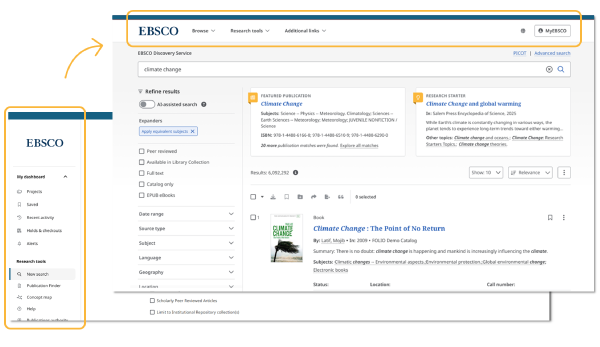
“At a high level, these updates focus on how navigation and filtering tools are organized within the interface. We’re moving the primary navigation from a left-hand panel to the top of the page, which creates a more consistent experience across screens and frees up space for content and tools. As part of this change, the Dashboard will live within the MyEBSCO section in the top navigation, grouping personalization features together in a more intuitive way.
We’re also introducing an option that allows libraries to keep the filter panel open on the left-hand side by default. This is a direct response to feedback from users who rely heavily on filtering and want quicker access without repeatedly reopening panels.
In essence, this work brings together elements of both the newer and classic EBSCO experiences, combining familiar navigation patterns with a layout that better supports expanding functionality and accessibility.”
Below is a preview of the planned update to the interface (subject to change before launch).
Why is EBSCO making these updates?
“When we initially introduced the current interface, we were focused on improving clarity, accessibility and overall usability. Since then, the pace of innovation has accelerated, particularly around AI-assisted features and new discovery workflows.
Simply put, the current layout limits our ability to introduce new tools our users want without adding disruptive friction or clutter.
These findings dovetail with the overall feedback we have consistently received from customers regarding the new user interface. Our customers value navigation efficiency and smoother access to robust research tools, and we aim to directly address these concerns with this update. We highly value the voices of our customers and users, and appreciate the opportunity to respond with a positive change to the product.
Ultimately, these updates create a foundation that supports what libraries are asking for today, while making sure the interface can continue to evolve in the years ahead.”
When will the new navigation roll out?
“We plan to roll out these updates in early July 2026. Specific timelines and opportunities to see the new navigation framework will be shared as we get closer to release, including guidance on how libraries can prepare.”
What do librarians need to know about the change?
“First, while navigation placement is changing, core functionality and workflows will remain familiar. Users will still have access to the same tools and features, just organized in a way that better supports future growth.
Second, we recognize that interface changes affect local documentation and training materials. We’ll be providing updated resources and guidance to help libraries update their materials as efficiently as possible.
Finally, we want to hear from our customers early. Feedback has played a meaningful role in shaping these updates, and ongoing input will continue to inform how we refine the experience moving forward.”