Summary:
This blog explores the many career paths available to economics graduates and shows how economics education helps students build skills to solve real-world problems. It also highlights insights from leading economists featured in the video A Career in Economics . . . It's Much More Than You Think, produced by the American Economic Association.
Key Takeaways:
- An economics degree opens doors to careers in policy, data science, healthcare, business, and more.
- Economists use research and data analysis to address global challenges and inform decision-making.
- Diverse voices and perspectives are essential in shaping economic policy and solutions.
- During National Economic Education Month, students are encouraged to explore how economics impacts the world.
In recognition of National Economic Education Month, EBSCO is spotlighting how a degree in economics can open the door to a wide range of fulfilling and impactful careers. Whether you’re a student exploring majors, a faculty member guiding future economists, or a librarian supporting academic research, economics education is about more than theory — it’s about preparing students to solve real-world problems.
The American Economic Association’s short film, A Career in Economics . . . It's Much More Than You Think, introduces viewers to economists from diverse backgrounds who use economics to improve lives and shape policy. Their experiences reveal that economics isn’t just about finance, banking, or government budgets — it’s about people, data, and decision-making at every level of society.
Economics in Action: Insights from the Video
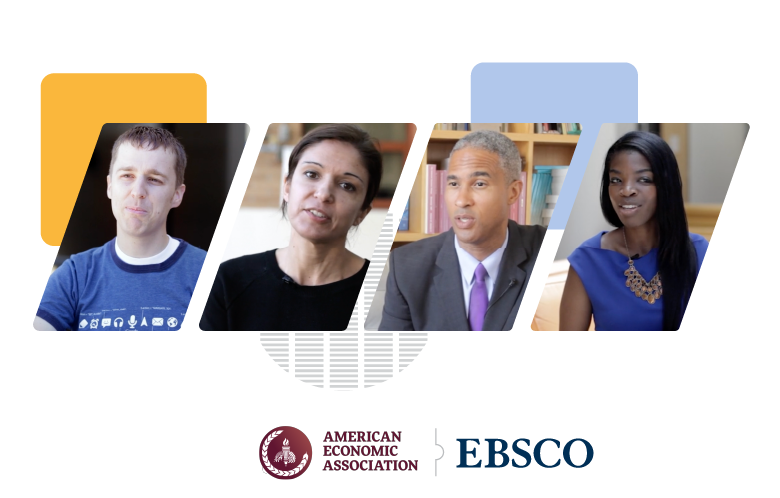
In the video, four economists share their experiences in the field of economics:
- Marcella Alsan, physician and public health researcher, describes how witnessing supply shortages in hospitals led her to study economics to better understand — and solve — systemic healthcare problems.
- Randall Lewis, senior principal economist at Amazon and former research scientist at Google, explains how the digital revolution and big data transformed economics, giving researchers tools to run experiments and inform better decision-making in markets and businesses.
- Britni Wilcher, currently a postdoctoral research fellow, discusses overcoming misconceptions about the field, the importance of representation, and how economics allows her to ask big questions about policy and equity.
- Peter Henry, dean emeritus at the NYU Stern School of Business, emphasizes the need for diverse voices in shaping economic policy and tackling society’s most complex problems.
Their stories illustrate that economics provides a lens for understanding human behavior, measuring social outcomes, and crafting solutions that impact people’s lives.
How EconLit with Full Text Prepares Students for Careers in Economics
Hearing economists talk about their work is inspiring — but for students, the journey begins with building a strong foundation in research and analysis. That’s where EconLit with Full Text comes in.
As the most reliable full-text database for economics research, EconLit with Full Text includes all the indexing in EconLit — the world’s most comprehensive index of economics literature. It helps students:
- Develop critical research skills by accessing thousands of peer-reviewed journals, working papers, dissertations, and books covering every area of economics.
- Connect theory with practice through literature that links classroom concepts to real-world challenges in health economics, labor markets, environmental policy, data science, and more.
- Analyze emerging trends — a skill essential for modern economic research and decision-making.
- Prepare for graduate school or policy roles with a deeper understanding of economic methods, data analysis, and scholarly communication.
Explore the Possibilities
This National Economic Education Month, share the Career in Economics video with your students, and use EconLit with Full Text to help them build their knowledge and skills. This database can inspire the next generation to ask better questions, find innovative answers, and create meaningful change in the world.