What You'll Learn:
- How food and cooking connect unexpected areas of study, including history, culture, identity, migration, sustainability, economics and science.
- Which books EBSCO Information Services collection development librarians recommend for exploring the many ways food shapes our lives and communities.
Ready to talk turkey? Let’s dig in!
⭐ Find our Team Pick: One book in this list earned a special nod from the EBSCO collection development team.
Few pleasures in life compared to an excellent meal. But how that meal makes it to the plate is a delicious blend of history, culture, art, science, economics, agriculture and human ingenuity. Add a dash of memoir, and food becomes a surprisingly rich lens through which to study the world.
Welcome back to Unexpectedly Academic, a series featuring book recommendations from EBSCO’s collection development librarians. Miss our first installment? Check it out.
Every Unexpectedly Academic list starts with a simple question:
What books would a librarian recommend on this topic?
Drawing on library requests, emerging trends and their knowledge of scholarly and general interest publishing, EBSCO’s collection development librarians select books that can help academic libraries support research and learning, spark curiosity and encourage discovery across disciplines.
For this installment, our librarians have prepared a literary feast: 10 books exploring what food can teach us about history, identity, migration, sustainability, culture, economics and more.
So why is food unexpectedly academic? Because food is never just food. A single ingredient, recipe or menu can point to systems of trade and labor, patterns of migration, questions of identity and belonging, environmental pressures, public health concerns, regional economies and cultural memory. What looks familiar on the plate often connects to much larger questions about how people live, move, create, adapt and care for one another.
Whether students and researchers are investigating global food systems, tracing culinary traditions, exploring the relationship between food and identity or simply looking for a fascinating read, there’s plenty here to savor.
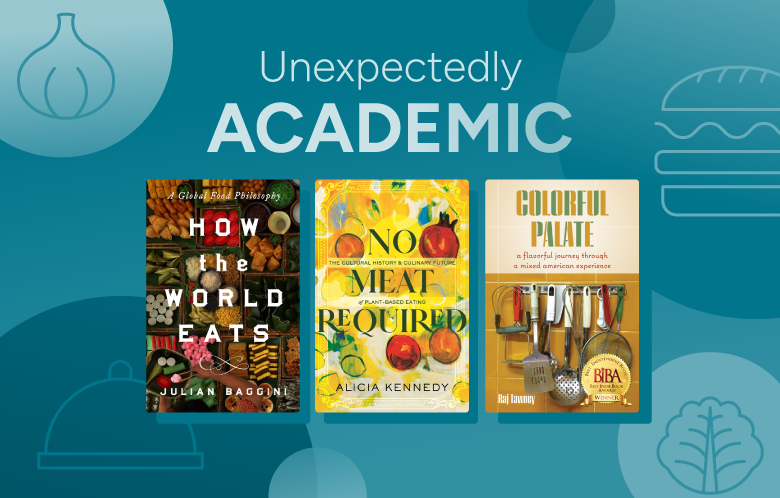
1. “How the World Eats: A Global Food Philosophy” by Julian Baggini
Published by Simon & Schuster
ISBN: 9781639368204
How we live is shaped by how we eat. Baggini travels across cultures and traditions to examine food practices past and present, asking what they can teach us about building a more sustainable food future.
2. “Vanilla: The History of an Extraordinary Bean” by Eric T. Jennings
Published by Yale University Press
ISBN: 9780300283525
How did one of the world’s most valuable crops become synonymous with “bland”? Jennings traces vanilla through botany, production, consumption, trade and colonial rivalry to reveal how one small bean became part of a much larger global story.
3. ⭐ TEAM PICK
“Tastes and Traditions: A Journey Through Menu History” by Nathalie Cooke
Published by Reaktion Books
ISBN: 9781836390688
At first glance, a menu may seem like a simple list of dishes. Cooke shows it is much more: a cultural artifact, a piece of visual design and a record of what people valued, celebrated, endured and imagined in a particular moment. From meals served during sieges to menus created for children, royalty, restaurants and special occasions, this title reveals how menus can help readers study social history, health trends, art, class, commerce and the human desire to make meals meaningful.

“This book is unexpectedly academic because it turns something most of us barely think about, the menu, into evidence of how people lived, communicated, celebrated and made meaning around food. Menus can be works of art, pieces of entertainment and records of cultural history, offering insight into a universally shared human activity: eating.”
“This book is unexpectedly academic because it turns something most of us barely think about, the menu, into evidence of how people lived, communicated, celebrated and made meaning around food. Menus can be works of art, pieces of entertainment and records of cultural history, offering insight into a universally shared human activity: eating.”
4. “Colorful Palate: A Flavorful Journey Through a Mixed American Experience” by Raj Tawney
Published by Fordham University Press
ISBN: 9781531504588
Growing up in an Indian, Puerto Rican and Italian-American family, Raj Tawney experienced identity through an extraordinary mix of cultures and cuisines. His memoir explores belonging, family and the comforting flavors of the childhood kitchen.
5. “No Meat Required: The Cultural History and Culinary Future of Plant-Based Eating” by Alicia Kennedy
Published by Beacon Press
ISBN: 9780807069189
Plant-based eating may feel increasingly mainstream, but its history is anything but simple. Kennedy explores the radical and activist roots of vegetarian and vegan food movements while considering where plant-based eating might go next.
6. “Our South: Black Food Through My Lens” by Ashleigh Shanti
Published by Union Square & Co.
ISBN: 9781454949138
Part memoir, part regional history and part cookbook, chef Ashleigh Shanti takes readers on an award-winning culinary journey through five distinct regions of Black cooking in the American South, connecting food with place, memory and identity.
7. “The Last Sweet Bite: Stories and Recipes of Culinary Heritage Lost and Found” by Michael Shaikh
Published by Penguin Random House
ISBN: 9780593442852
In this James Beard Award-winning book, Michael Shaikh brings together stories of food, migration, human rights and culinary heritage, demonstrating how preserving and reclaiming cuisine can become an act of resistance, hope and survival.
8. “Red Sauce: How Italian Food Became American” by Ian MacAllen
Published by Rowman & Littlefield
ISBN: 9781538162354
What happens to a cuisine when it crosses an ocean? MacAllen traces Italian-American food from its roots in Italy through its transformation in the United States, separating stories, myths and facts to explore how these dishes became fixtures of American life.
9. “The Lost Supper: Searching for the Future of Food in the Flavors of the Past” by Taras Grescoe
Published by Greystone Books
ISBN: 9781771647649
Could some answers to the future of food be found in its past? Against the backdrop of concerns about industrial food production and sustainability, Grescoe investigates how restaurateurs, food producers and scientists are rediscovering ancient practices that sustained people for thousands of years.
10. “Poutine Nation: Lessons From the Unglamorous Rise of a Canadian Culinary Icon” by Sylvain Charlebois
Published by University of Toronto Press
ISBN: 9781487541644
How does a humble dish become a cultural icon? Blending history, food science, economics, cultural analysis and personal anecdotes, Charlebois examines the forces that shape food trends, and why some dishes disappear while others, like poutine, find fans around the world.
More Unexpectedly Academic Lists Are on the Way
There’s plenty more on the menu. In the months ahead, EBSCO’s collection development librarians will continue sharing recommendations on topics that spark curiosity and reveal unexpected connections across disciplines, helping libraries connect their communities with books that support research, learning and discovery.
Follow the EBSCOpost blog for the next installment of Unexpectedly Academic. Got a topic you want our team to explore? Submit a list request.
Hungry for More Books?
EBSCO customers can find these e-books and thousands more through GOBI Library Solutions and Mosaic.
Looking to get started with Mosaic? Request an account.