Key Takeaways:
- Peer-reviewed journals are essential for establishing authority in psychological science.
- Peer review improves research quality and helps mitigate misinformation.
- APA PsycArticles® titles have measurable impact and reach, leading the field in rate of citations vs. articles published.
- APA PsycArticles serves students, educators, researchers and clinicians effectively.
Over the past decade, psychology has stepped into a more visible role in public discourse — addressing topics from trauma and resilience to digital behavior and workplace wellbeing. As the field responds to increasingly urgent questions, the need for timely, high-quality, peer-reviewed research has never been clearer.
When academic and clinical decisions hinge on credible evidence, peer-reviewed journals remain among the most effective tools for ensuring accuracy, transparency, and integrity in published findings.
Why Peer Review Matters in Psychology
Peer review serves as the discipline’s first line of defense against misinformation and methodological error. While not infallible, it consistently proves to be a powerful filter — ensuring that only research with validated methods, sound logic, and appropriate interpretation reaches publication.
Independent reviews by subject-matter experts help flag potential flaws, strengthen arguments, and challenge assumptions before the public or practitioners act on the findings. In fact, multiple studies and surveys show that peer-reviewed articles are cited more, trusted more, and used more frequently in academic and policy settings.
This is not just theoretical: during the COVID-19 pandemic, several widely cited preprints were later contradicted or retracted once peer-reviewed studies provided clearer context or corrections. The takeaway is clear — peer review may not guarantee accuracy, but it certainly improves reliability.
APA PsycArticles: Curated Scholarship for Psychological Science
APA PsycArticles is a full-text journal collection published by the American Psychological Association (APA), offering access to the complete publication history of more than 115 APA-published and affiliated journals. These titles span core and emerging areas in psychology — from clinical theory and cognitive neuroscience to health behavior and organizational psychology.
All content is peer-reviewed, with no embargoes on new issues, and each journal reflects APA’s commitment to scientific rigor and editorial independence.
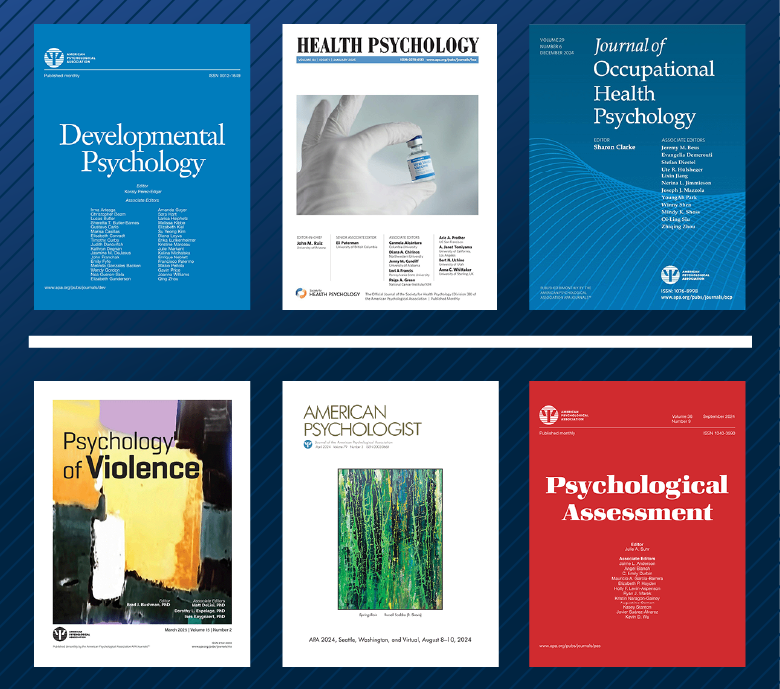
Citation Footprint: Measuring the Influence of APA Journals
In addition to peer review, another way to measure the authority of APA PsycArticles is through its citation footprint.
In 2024, APA Journals were cited at more than twice the rate of articles published, demonstrating APA’s commitment to publishing the most impactful research in psychology.
This outsized impact reflects not just quantity, but quality: scholars consistently turn to APA journals to support literature reviews, meta-analyses, course syllabi, and grant-funded research.
Who Uses APA PsycArticles — And Why
For Educators and Students
Educators rely on APA PsycArticles to integrate current, authoritative scholarship into psychology programs. Students gain experience analyzing primary sources and understanding the standards that govern scientific publication.
For Researchers
APA PsycInfo may be the best place to discover what’s been published — but APA PsycArticles provides the essential full-text access to dig deeper, cite accurately, and build upon peer-reviewed findings.
For Clinicians
Many APA PsycArticles titles translate theory into practice, such as Practice Innovations, Clinical Practice in Pediatric Psychology and Psychology of Addictive Behaviors. These publications help bridge the gap between empirical research and day-to-day care.
Supporting Better Research Habits
APA PsycArticles is fully integrated with EBSCOhost, offering:
- Advanced search filters (e.g., by population, methodology, age, gender)
- Alerts for new articles by topic, author, or journal
- Tools to save, cite, and export content to citation managers
These features support researchers and students in managing information responsibly—an increasingly critical skill in today’s academic landscape.
Closing the Research Gap Between Discovery and Application
Peer-reviewed journals are not the starting point for research — that’s the role of comprehensive indexing tools like APA PsycInfo. But once relevant studies are discovered, APA PsycArticles ensures users have reliable, full-text access to apply that knowledge in teaching, publication, or practice.
When paired with APA PsycBooks®, APA PsycTests®, and APA PsycTherapy ®, the collection helps institutions build a psychological science portfolio that’s comprehensive.
Conclusion: When Evidence Matters, Start with Trust
As psychology continues to expand its influence in areas like public policy, health care and education, access to trusted, peer-reviewed journals remains critical. APA PsycArticles provides that access — backed by a legacy of editorial rigor and demonstrated academic impact.
For institutions looking to strengthen their research and teaching environments, APA PsycArticles offers not just content, but confidence. If your institution has a psychology program but does not subscribe to APA PsycArticles, see what you are missing with a free trial.