
Overview
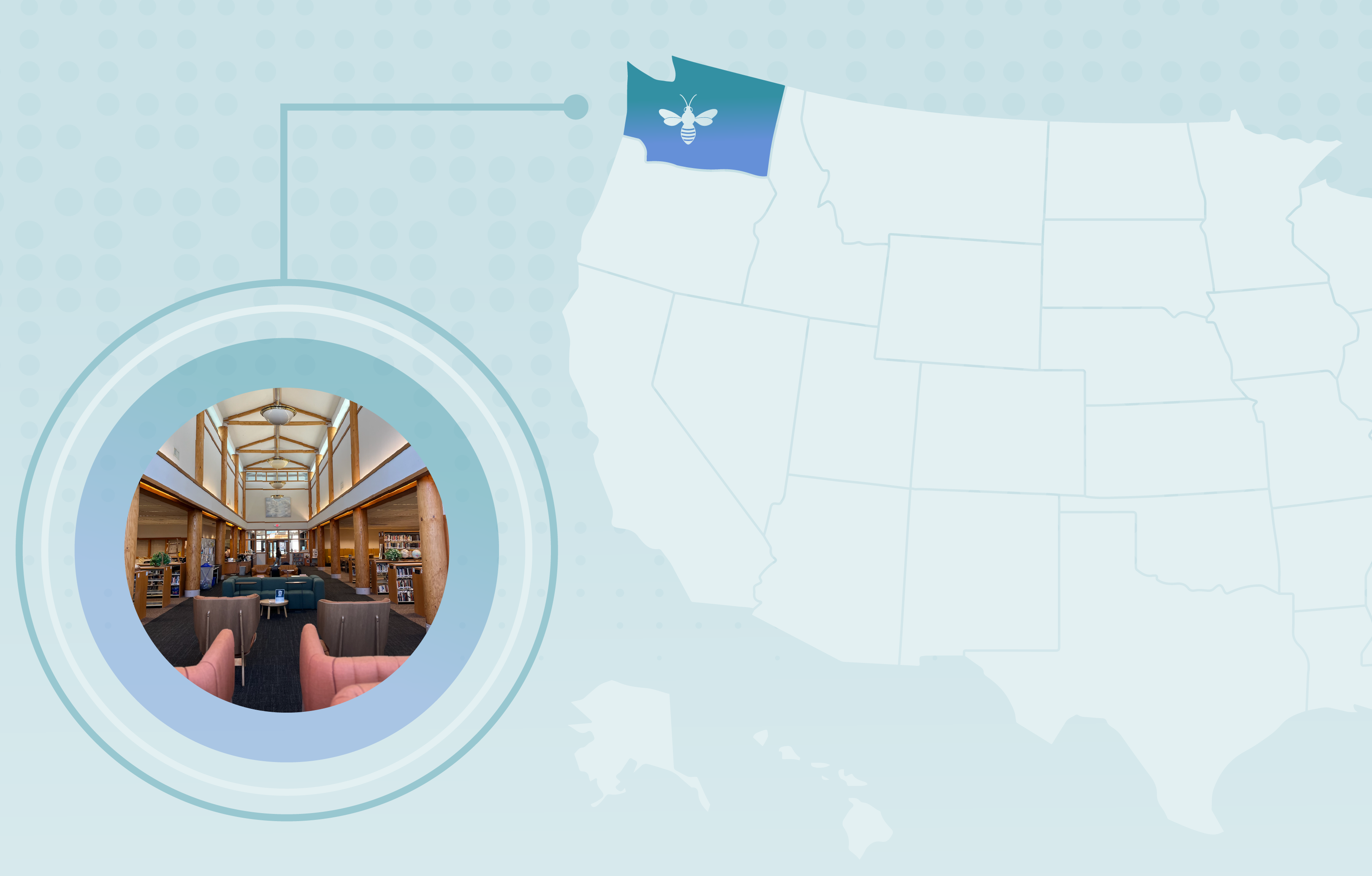
Located on the Yakama Nation Reservation in Toppenish, Washington, in the Lower Yakima Valley, the Donald K.C. North Library at Heritage University serves as both an academic and public library. It supports approximately 1,000 students, many from Hispanic and Native American communities, at one of the few Hispanic-Serving Institutions (HSIs) and Native American-Serving Nontribal Institutions (NASNTIs) in the United States.
With a small team and limited resources, the library plays a central role in providing access to academic and community resources and maintains a collection of approximately 21,000 books.
For a team of this size, day-to-day usability and staff capacity are critical. Any system in place needs to be manageable, accessible, and realistic for staff to use, while still supporting the needs of both students and the broader community.
The Challenge: Managing a Complex System with Limited Resources
Before moving to FOLIO, the library used Alma and Primo through a consortium. While the system offered a wide range of functionality, it proved difficult for a small team to navigate and maintain on a daily basis.
Victoria Castro, MSLS, Systems, Access, & Discovery Librarian at the Donald K.C. North Library, described the experience as challenging in practice. “We didn’t find it very user-friendly. There was a steep learning curve, and accessing support or training was difficult. The amount of documentation often felt overwhelming.”
For a library without dedicated technical staff, those challenges added up quickly. Tasks that should have been straightforward often required extra time and effort, and getting help when issues arose was not always easy.
The team needed a system that staff could realistically use day to day, one that reduced complexity while still supporting the needs of both the library and its community.
The Solution: A Guided and Structured Path to FOLIO
With a small team and no formal procurement framework, the evaluation process was practical and internally driven. Castro explains the process of weighing options, including Koha and Aspen Discovery, with a focus on cost, functionality, and long-term fit. “We did our best to analyze the price, interface, functionality, integration, API capability, app implementation features, and more for each option.”
For a team without dedicated guidance, the process required building a case from the ground up and identifying a solution that could realistically work within their constraints.
Because the library already had a relationship with EBSCO, FOLIO stood out as a natural fit. That familiarity provided an added level of confidence during the decision-making process. “Given that we already had an existing subscription to EBSCO resources and EBSCOhost, FOLIO seemed like a natural choice.”
The Outcome: A Clear and Supportive Implementation Experience
For a team new to ILS migration, the implementation process could have been overwhelming. Instead, it proved to be structured and manageable from the start.

I had never been part of an ILS migration, but the clear and straightforward process lessened my worry.
I had never been part of an ILS migration, but the clear and straightforward process lessened my worry.
Regular communication, defined milestones, and weekly meetings helped the team stay aligned and on track for go-live within eight months, even as they managed other major projects.
For a small team balancing multiple priorities, Castro explained that structure helped turn a complex process into something the team could confidently manage. “The migration team made every step easy and provided reassurance when technical steps became more complex.”
Rather than navigating the process alone, the team had consistent guidance throughout implementation, helping reduce uncertainty and making a complex transition feel manageable.
Keeping the Project on Track
Strong project management helped the library stay focused and move toward go-live on an ambitious timeline. According to Castro, the EBSCO team provided the structure needed to keep everything progressing.
Castro said deadlines, communication, and weekly meetings were essential. “What helped our team stay on track were the calendar deadline dates, the frequent emails, and the weekly meetings we had every Tuesday morning together.”
The project remained on schedule even as the library managed other major initiatives, including reclassifying its collection and adding 5,000 books to the system, a significant effort for a small team.
Castro said the team was proud of what they accomplished during the migration. “We met tight deadlines while working on other library projects, which was an amazing accomplishment.”
Early Improvements in Usability and Workflows
Even before go-live, the team began to notice differences in how they interacted with the system day-to-day. Castro noted that she was “confident that our non-technical library staff could pick it up quickly.”
That confidence came from early hands-on experience with the system, which felt more intuitive and easier to navigate than their previous environment. Troubleshooting and system management also became more straightforward, as “understanding how to troubleshoot link issues in Alma was a hassle, but the EBSCO admin interface made it much easier.”
Understanding how to troubleshoot link issues in Alma was a hassle, but the EBSCO admin interface made it much easier.
Understanding how to troubleshoot link issues in Alma was a hassle, but the EBSCO admin interface made it much easier.
For a team without deep technical expertise, reducing that level of complexity made a meaningful difference in daily work. The staff interface also stood out as more approachable, helping lower the barrier to adoption. As Castro shared, “We particularly love the back-end staff user interface, which is easy on the eye.”
Approaching Go-Live with Confidence
As the library nears go-live, the team feels optimistic about what comes next. Castro shared that the transition already feels manageable, with familiar elements easing the shift, and the overall system feeling much more approachable.
“We feel optimistic and look forward to working in a more user-friendly system. Some basic workflows appear very similar to Alma, which is comforting. We feel like we’ve been put in good hands.”
That confidence reflects both the system itself and the structured support that guided the implementation from the start.
Advice for Other Libraries
For libraries considering a similar transition, Castro believes both the platform and the partnership matter. “FOLIO is a great option for institutions with existing EBSCO subscriptions. Their skill in bringing teams together is stellar, and their knowledge of I.T. is amazing. You can see their deep knowledge and passion as well.”
She also highlighted something less technical, but just as meaningful, during a major project. Castro said the team brought both expertise and personality to the process. “Their migration teams bring a sense of humor and were a hoot to work with!”
Looking Ahead
Once FOLIO is live, the team is eager to see how the system supports more efficient workflows and how quickly staff adapt to the new environment.
As Castro noted, “what I’m looking forward to the most is how much easier it will be to create workflows and seeing how the library staff takes to it.”
With implementation nearing completion, the library is well-positioned to move forward with a more manageable system that better fits its day-to-day needs.