Key Takeaways:
- Social emotional learning (SEL) is strengthened when students practice relationship skills — such as communication, collaboration and empathy — through research and inquiry-based activities using school library databases.
-
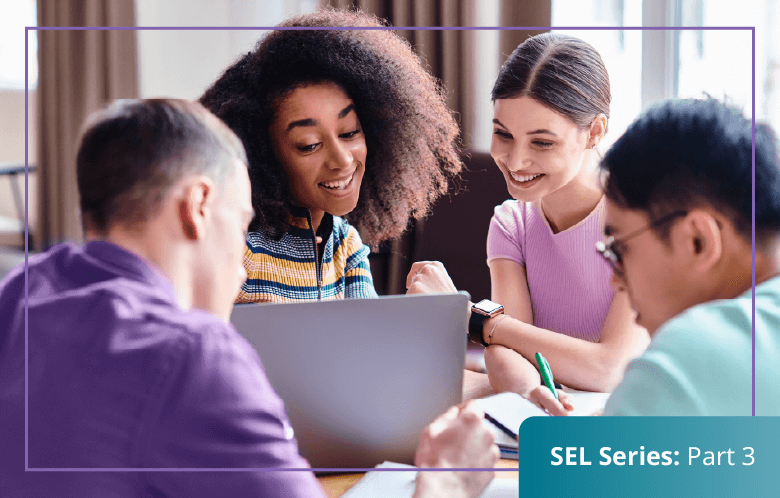
Librarian-led collaborative research projects give students meaningful ways to work together, build positive peer connections and develop the SEL relationship skills essential for successful collaboration.
Research isn’t only about gathering information. When students work together to explore ideas and evaluate sources, they also build relationship skills that are central to social emotional learning (SEL). In the CASEL framework, relationship skills refer to the ability to establish and maintain supportive connections and to navigate interactions with individuals and groups. These skills include effective communication, teamwork, collaborative problem-solving, conflict resolution, resisting negative social pressure, and showing leadership.
Why Relationship Skills Matter in Research
Positive interpersonal relationships with peers and teachers have been linked to stronger academic outcomes, including higher grades. Research projects that rely on library databases naturally create opportunities for students to practice these skills. Whether they are preparing a persuasive paper, organizing a group presentation, staging a debate or producing a creative performance, students must communicate clearly, divide responsibilities, solve problems, resolve disagreements and support one another toward a shared goal.
Collaborative learning also strengthens students’ sense of connection, acceptance and belonging at school. Working with classmates allows them to learn from mistakes, appreciate diverse viewpoints and develop empathy.
Where SEL and Research Intersect
EBSCO’s Points of View Ultimate is an especially valuable resource for collaborative projects. The database includes overview essays, point and counterpoint pieces, and guides to critical analysis that help students examine global issues and controversial topics. Teams can use these materials to write persuasive essays or prepare for debates on subjects such as censorship, immigration or artificial intelligence. Engaging with well-curated perspectives helps students evaluate evidence, consider multiple sides of an issue and participate in respectful dialogue.
Fiction and nonfiction can also deepen students’ understanding of the world and broaden their capacity for empathy. Literary Reference Ultimate provides full text for short stories, novels and personal essays that students can read together and discuss. Curated topic pages — containing plot summaries, critical analysis, author biographies, videos and related content — help students explore genres, historical contexts and themes. These resources give students meaningful ways to reflect on lives unlike their own and to build empathy as a result.
Collaborative Research Projects and Debates Using Database Resources
Library databases offer a solid foundation for inquiry-based learning that requires shared decision-making and collective analysis. School librarians can design projects that encourage students to investigate a topic from multiple angles and then synthesize what they’ve learned as a team.
Below are a few examples of collaborative projects that work well with database content:
- Structured debates: Using Points of View Ultimate, groups can research both the affirmative and negative positions before dividing into teams. Students gather evidence, construct arguments and anticipate counterarguments. This process strengthens communication, critical thinking and respectful disagreement.
- Issue research teams: Students take on roles such as researcher, fact-checker or synthesizer. Each student uses curated database content to contribute to the group’s final product. Because roles are interdependent, the group must coordinate clearly and support each member’s progress.
- Compare-and-contrast projects: Students investigate how different authors, cultures or time periods address the same theme. Literary Reference Ultimate provides literary works and critical commentary that students can organize into group presentations or multimedia exhibits.
- Cross-disciplinary explorations: Librarians can collaborate with teachers to design research tasks that require students to gather information from science, history, literature or current issues databases. Working across subjects encourages students to consider how multiple perspectives contribute to a deeper understanding of complex issues.
These project formats give students regular practice in listening, negotiating and building on each other’s ideas — all essential SEL outcomes.
Librarian-Facilitated Group Activities That Strengthen SEL
School librarians are uniquely positioned to guide collaborative activities that foster communication, empathy and shared problem-solving. Even short, low-stakes group tasks help students develop confidence navigating interpersonal interactions.
Here are several group activities librarians can facilitate to support SEL:
- Source evaluation stations: Small groups rotate through stations featuring different database articles. Students identify bias, evaluate credibility and discuss what makes a source trustworthy. This encourages healthy debate and shared reasoning.
- Jigsaw-style research: Each group member explores a different database article on the same topic, then teaches their peers what they learned. This models interdependence and values every student’s contribution.
- Character empathy circles: When using Literary Reference Ultimate, students select a character or author and share how their experiences might shape actions or viewpoints. This activity helps students practice perspective-taking.
- Collaborative annotation: Using digital annotation tools with database articles, students highlight key ideas or questions and respond to each other’s notes. This promotes dialogue and teaches students how to build meaning together.
- Mini-debate warm-ups: Before a larger research project, librarians can host quick roundtable debates using a short article from Points of View Ultimate. Students practice taking a stance, listening actively and responding respectfully.
These activities provide structure and support while allowing students to practice the interpersonal skills that help them succeed in research and beyond.
Strengthening SEL Through Research-Rich Learning Experiences
When librarians integrate database-driven research into collaborative projects, they help students build essential SEL competencies such as communication, empathy and leadership. These experiences give students more than academic skills — they offer opportunities to explore credible sources, discuss diverse viewpoints and work together toward shared goals. By guiding students through inquiry-based learning experiences, librarians create environments where curiosity, respect and meaningful connection can grow.