Transcript | Download
Unsung Heroes of Academic Research: Magazine Archives as Primary Sources
Joshua Beene
Hey, everyone, and thanks for joining us for today's webcast, Unsung Heroes of Academic Research Magazine Archives as Primary Sources.
I'm Joshua Beene, webcast manager for Library Journal, and I'll be your moderator today. And we are going to get started with the presentation in just a couple minutes. But first, let's cover some quick housekeeping info. So the layout of your screen is completely customizable, and you can resize any of the windows, and you can move them around. So feel free to adjust them as needed. If you close any of the windows, you can bring them back up by clicking on the appropriate button down in the toolbar at the bottom of the screen.
If you would like to chat with your fellow attendees as you're watching, you can do that using the attendee chat window. But if you have any questions for the speakers, be sure to submit those separately in the q and a window, and you can drop your questions in there at any time, and we will address them near the end of the webcast after the presentation. You'll find a copy of the slide deck in the resource list window, and you can download your continuing education certificate from the certification window after you submit the viewing requirements.
And finally, if you're having any technical difficulties, click on that help widget where you can find the system requirements and the FAQs.
Usually, with this webinar platform, if you're having a problem with the sound or the slides are not updating, just try refreshing the page. Just reload or refresh the page in your Internet browser, and whenever you refresh it when it reloads, it usually magically fixes most of the glitches that you might experience. So give that a try if you're having problems.
If that doesn't work, feel free to send me a message in the q and a, and I'll try to help you figure out your issue. The webcast is being recorded. So if you miss any part of it, you have to step away to help a patron. If you'd like to share it with a friend or colleague that wasn't able to watch live with us today, the on-demand recordings are ready to watch within just a few hours of the live broadcast. You can use the same link that you used to log in today, or you can use the link in the follow-up email that you'll get tomorrow.
Alright. Let's get started with some intros here.
So our two speakers today are Sarah Mueth, and you may have to correct me on her name, Sarah. I apologize. I probably butchered it. And Courtney Peckham. Sarah has worked in the serials and electronic resources and as a electronic resources librarian at the University of North Carolina Wilmington for seven years, where she concentrates on open access, usability, and accessibility and collection development. Courtney has an academic background in history and library science, and she has been with EBSCO's research databases team for eighteen years, and her current focus is on expanding EBSCO's, magazine archive portfolio. We're excited to have both, speaking today on the important role of magazine archive, on the important role that magazine archives play as primary sources in academic research.
And with that, I'll go ahead and hand things over to Sarah to get us started. So take it away, Sarah.
Sarah Mueth
Hi, everyone. Thank you to Joshua for the introduction and to Courtney for presenting with me and EBSCO for inviting me to speak. And thank you to Library Journal for hosting this, and thanks to all of you for choosing to be here today. My name is Sarah Mueth, and I am the serials and electronic resources librarian at the University of North Carolina. I've been here for eight years, and before that, I was in electronic resources and web projects administration at the University of Illinois campus.
So to kick things off, I want to tell you a little bit about UNCW.
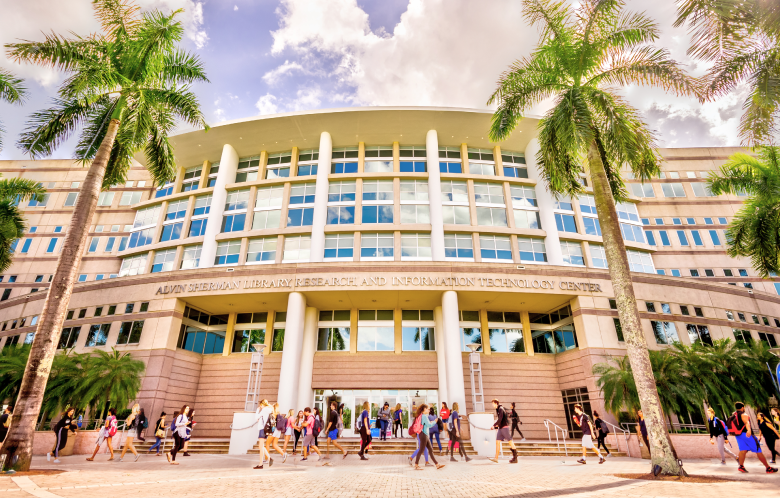
This slide shows a portion of our lovely campus. UNCW is one of the seventeen schools in the University of North Carolina system, and at 78 years old, it is one of the newer schools.
We are the state's coastal university nestled between the Cape Fear River to the west and the Atlantic Ocean to the east, and we are on the far southeastern side of the state. Driving wise, we're about two hours from Raleigh, three and a half hours from Charlotte, and about an hour and a half from Myrtle Beach, South Carolina.
UNCW is an R2 institution and offers PhDs in the six areas of study listed here, and there are several more in development.
In the fall of 2024, we had over 15,000 undergraduate students and about 3,600 graduate students for a total enrollment of nearly nineteen thousand. In academic year 2024, we reached our highest ever retention rate of 88%, and the school also employs nearly 2,500 faculty and staff.
And so the UNCW campus has just one library, but it's composed of two buildings, Randall Hall and Discovery Hall, and they are linked between the first and second floors. This slide is an aerial view of the somewhat recently constructed Discovery Hall, which opened in August 2024.
Randall Hall is the original library space and has gone through several renovations and expansions in its fifty-ish year history. The entirety of the library's physical collections, except for special collections and archives, is housed in Randall Hall, and Discovery Hall has eighty thousand square feet and three floors, nearly twelve hundred seats for student study and collaborative learning.
At the library, we have about thirty-one full time faculty librarians and thirty-one staff.
Our recent most recent ACRL, survey showed this, these numbers for our holdings, so our collection is pretty robust.
We have a materials budget of about three point one million dollars and approximately ninety percent of that goes to continuing resources.
In my role, I'm part of the resource description and management team, which is the department formerly known as technical services. I do a lot of the technical side of electronic resources work, which are the tasks that keep our resources up and running, such as EZproxy updates and management, troubleshooting access issues, communicating and negotiating with content providers, vendors, and publishers on a regular basis. I maintain the database a to z list in the and perhaps most importantly, I make sure that invoices are paid.
But a considerable portion of my time is also devoted to collection development and management. I work closely with the collection development librarian and the associate director of resource description and management to make decisions about new purchases and subscriptions, parenthetically, sometimes cancellations.
And this brings me to where I'm going to begin with the story of the UNCW Library's decision to start purchasing magazine archives.
So I've gone back over emails and notes, and this slide is not entirely accurate because our venture into publishing magazine archives actually started in two thousand sixteen.
Like many libraries, we had a sizable bound periodicals collection and like many libraries, our bound periodicals collection was targeted for reduction to make way for student space. With this in mind, when the library received one-time funds from the university, we started purchasing magazine archives and journal back files.
A major weeding project was completed in 2016, which was about a year before I started, and that project was successful in removing about a third of the shelves and adding the Fortune Life Magazine and Time archives to our collection.
When I started in at the end of 2017, we still had 3,920 shelves and 70,560 bound volumes give or take.
We got more one-time funds in 2018 and added nation, national review, and the New Republic.
And in 2019 we had a special pricing deal from the Carolina Consortium for select archive purchases, and with that one-time money, we bought Forbes and US News and World Report.
And then picture it if you will. It's January 2020.
We've just returned from winter break. I was in my office, which happens to be or happened at the time to be next to a conference room, which happened to be where our senior leadership team was meeting, and I was suddenly summoned to join them. And they told me, we've been offered money to renovate the first floor to make room for student space, and that means we have to drastically reduce the footprint of the bound periodicals collection. We need to do it by the end of the academic year, which is June 30th, and we'd like for you to lead the project.
And I said, okay. Sure. And so as I mentioned, we had over 3,900 shelves, which added up to over eleven thousand linear feet. And if you do the math on that, that's two miles of shelving and approximately 7,500 bound volumes. So this was this was going to be no small feat. And the first thing I did after having a brief moment of panic was to generate spreadsheet of all of our bound periodicals and sort it by assigned subject code.
I shared the list with relevant parties like liaison librarians, special collections and archives, interlibrary loan, and my collection development colleagues, and asked for their feedback about which titles we should keep, which we should try to get electronically, and which we could discard.
And meanwhile, I was double checking to see if we already had electronic ish access to anything on the shelf because that would also help inform our decision making. I set February first as the deadline for making decisions, hired four student workers to help with the physical removal of the materials, and we were off. And I don't think I need to tell you what happened six weeks later in March 2020 that brought the in-person part of our project to a screeching halt.
Thanks to our amazing building operations crew who were basically the only people allowed in the building, the removal of the periodicals and renovation of their former location was completed on time.
Some of the titles were rehomed to special collections, but in the end, we kept just one hundred titles and two hundred and fifty shelves. We were able to open over seven thousand square feet of new study space for students, and that area has been immensely popular and is constantly in use. And during that purchasing round, we added the Atlantic, Ebony, and Architectural Digest along with a number of academic journal back files.
And so just to summarize our purchases, these are the magazine archives we purchased since two thousand sixteen both from EBSCO and from other vendors.
And you are probably by now thinking to yourself, gee, Sarah, that's cool. The renovation looks great. Aren't you here to talk about magazine archives and how they're re useful for research?
And, yes, that is correct. I am here for that. But I wanted to share the story of our deselection and renovation projects because I think they underscore our belief that magazine archives are important parts of our collection. This is a long list of both single title archives and archival collections because we realize the value of magazines.
Additionally, the titles we've purchased are ones that represented not only a significant amount of real estate, which meant that we kept them around and added to them for a long time, but they also survived other deselections, which also meant we kept them around for a long time.
A lot of emphasis is placed on historical newspapers for research, and we have purchased a number of those as well. But magazine archives, in my mind, are a natural complement to historical newspapers because they offer national and international perspectives versus regional ones. They often feature long form analyses and provide a broader view of historic and cultural events.
So I apologize. This is slightly out of order, so I am going to skip ahead and, say that in 2020, we replaced our homegrown Drupal based subject and course guide with SpringShares LibGuides, which meant that we had to create a new database a to z list as well.
In the Drupal list, we could assign resource types, which then grouped resources together in another list, but neither the full list nor the group lists were easily searchable aside from using control f, and sorting by type was clunky. So my web services and discovery librarian colleague decided to do some housecleaning and initiated a refresh of the database types. We knew we didn't want to get super granular with types because we didn't want to overwhelm anyone, but we did want more descriptive terminology.
And during this process, I found that the resource type descriptors we were using, were not really consistent. They were pretty all over the place, particularly for archival and historical databases. Only one magazine was tagged as a primary source while the others were some combination of newspaper resource, article database, and one was labeled online collection.
So you can see on this slide that we introduced just a few new concepts and deleted a few others because what, for example, is another database and saying open access instead of website is more in line with terminology, so we hoped it would be recognizable to users.
We kept the newspaper resources and primary sources historical as types and applied both of these labels to newspapers, and then magazine archives were labeled as both primary sources and article databases because philosophically, that seemed the most accurate.
Going back to my point about magazines complementing newspapers, categorizing them together as primary sources is an indicator to users that they can also use magazines for their research.
And I want to note that at that time, these labels seemed not only the most accurate but also sufficient. In hindsight, could we have introduced magazine archive as a type because our purchases in that area have been so robust? We probably could have, but I see these labels as living and changeable. And so in the future, it could be a term we use, especially as we purchase more archives.
And then in the following year, in 2023, we initiated a subject tagging project for the database list, and I think updating the types help the liaisons choose how to apply tags. For example, the English department probably has little use for data and statistics resources, while math and physics probably doesn't need anything labeled primary sources historical.
And I think it seems obvious, but with relevant labels, there's less noise to sift through, which makes it easier for liaison librarians and instructors and frontline staff to point researchers to the resources they're looking for.
So in terms of how these archives are used, I know that we have professors giving assignments that require use of film reviews current with the year of release. So we regularly have people coming to the library looking for reviews from 1972 of the Godfather or of the original 1931 Dracula. And Wilmington is also a hotspot for the film and television industries, and we have the nickname Hollywood of the East.
So as such, we have robust film and theater departments, and they use publications like Architectural Digest for set design inspiration. Art students can use the same database to learn history and design theory. Business students profiling companies can use publications like Forbes or Fortune to trace company history or industry trends, and creative writing classes can use archives in general to discover ideas and inspiration in the historical pop cultural zeitgeist. And there's a lot of other ways that magazine archives can be used. I am not an instructional librarian. I'm not an instructional designer.
My ideas listed here for how and in which fields magazine archives can be used are pretty crude, but these are some ideas I've had for how they could be used.
I'm sure that in much in more experienced hands, someone could come up with fascinating projects that delve even deeper, and I know Courtney is going to give some great concrete examples of what resources can be found in these archives. So I will be honest with you. The use of our magazine archives doesn't compare with use of our historical newspapers.
I would like to see the use be higher. Since we realigned resource types and assigned subjects to the databases, I have seen usage start to tick up, and almost all of the magazine archives I've mentioned so far are featured on a subject or course guide, and I think that is also a contributing factor.
So earlier, I talked about how it started with our archives purchases, and now I want to share with you where we're going. We have several more magazine archives on our wish list for collections, Esquire and Vanity Fair, Southern Living, and Travel and Leisure are regionally relevant to us because Wilmington and the surrounding areas are popular tourist destinations that are rich in history, kind of a foodie destination as well, and we also have a travel and recreation bachelor's degree that these could be used for. We'd also like to add Jet as a companion to Ebony and to help ensure that our collection is diverse, equitable, and inclusive.
So the so-called liberal arts education is vital, for producing knowledgeable, well-rounded citizens. I know that I am proverbially preaching to the proverbial choir when I say that exposure to a diversity of perspectives along with information literacy are critical for academic, personal, and professional development and also well-being.
Moreover, the beginnings and histories of things that are current news topics today can be found in magazine archives, things like Title IX and affirmative action, the history of Israel and Palestine, immigration, environment, and climate change.
But also art, history, literature, technology, music, literally so many other important topics that have shaped our world. And as a matter of fact, the New York Times published, in the beginning of October an article, about the 25 most influential magazine covers of all time.
It included covers from many of the publications I've mentioned, and there was a quote from the beginning of the article that says, even if magazines don't hold the same cultural sway or profits or attention spans as they once did, it's undeniable that the people who make them and the stories they and images they've made still have much to show us, not just about how we read and see, but also about how we live. And this has been true for nearly two centuries because popular magazines like Scientific American and The Atlantic have both been continuously published since the mid eighteen hundreds.
And so in conclusion, I found some inspiration in the university's mission statement, which says in part that UNCW's commitment to student engagement, creative inquiry, critical thinking, thoughtful expression, and civic responsibility defines the student experience. UNCW is a rapidly growing institution, and because of this and the reasons detailed previously, we will continue to purchase magazine archives as they are available and as money allows. So thank you again for your time and I will turn things over to Courtney Peckham for the vendor perspective.
Courtney Peckham
Thank you very much, Sarah. Hello, everybody. I'm very happy to be here with you all today. Thank you for coming.
So I'm going to first start with how EBSCO curates our magazine archive collection just very briefly.
So what are we looking for when evaluating new archives, potential new archives?
First, diversity of topics. We want a well-rounded collection of magazine archive titles, politics, culture, sports, business, literature. We're looking for a wide range of subjects to cover. We also look at the depth of the coverage.
We want publications that offer significant insight into the subjects they cover. And if they specialize in a subject, all the better.
Visual appeal is important. Most popular magazines include great images and photography.
Time period of coverage is something that we care very much about. We look for titles that go back to at least the 1990s, but we prefer titles with deep back files as they obviously bring more value to our library partners. And we always want to take them back to volume one issue one. There may be may be occasions where we can't find that very earliest content.
But for the most part, all of our magazine archive products do go back to volume one issue one.
Editorial standards and reputation are important. We want to feature titles that are known for their journalistic integrity, make sure that they are well regarded publications.
Historical and cultural value. Many of our magazine archives document key moments in history and can be used to inform how values and attitudes change over time.
And of course, advertisements, they are a treasure trove. You can look at the history of business and marketing, consumer behavior, and much, much more through the lens of advertisements.
I'll touch on that a bit later again. And letters to the editor can offer insight into readers' thoughts and concerns about the issues of the day.
And now diving into magazine archives as primary sources, which is our really our topic for the day.
So I envision a sample research assignment here, maybe would be assigned by a professor to an undergraduate class in maybe American history or media studies to analyze how American identity values and political discourse evolved in the latter half of the twentieth century through a comparative study of time, life, and the Atlantic magazine archives.
And they might suggest key themes to examine such as civil rights and social justice movements, the Cold War and US foreign policy, and technical and cultural transformations. And for this example, we'll kind of follow that last that third bullet and look at the 1960s space race that culminated the Apollo 11 program.
And a student might be assigned different types of magazine archives for analysis or be asked to discover different types of magazine archives for this kind of analysis for comparison and contrasting the coverage. For instance, Time Magazine is very news oriented. It's considered a mainstream publication. It is geared to the average educated reader.
Life magazine is photojournalism based and is a great provides great representation of societal changes, public sentiment.
And the Atlantic is more of a long form analysis and opinion publication. So it can be used to examine the intellectual and literary discourse on whatever you're examining.
So in this article from 1963, “Why land on the moon?” This the authors discussed the costs and benefits of the moon landing. Congress had just appropriated a significant amount of money to this, and the authors were diving into to kind of what this means for our country and for humanity. He's very philosophical, and they conclude that the primary objective of sending humans into space is the extension of man's control over his physical environment.
Whereas in Time Magazine, we are looking at coverage of the crew itself of Apollo eleven and the impact that the that this this adventure had on their families.
It goes into their careers and qualifications, the impact, as I said, on their families and what this means for their futures. So kind of a human impact angle there.
And, of course, Life magazine was the great photographic chronicler of the twentieth century, and there's great coverage here of the liftoff on July 16th, 1969. In the upper left, we see Pat Collins and Joan Aldrin, two wives of two of the astronauts, the Apollo eleven astronauts watching from home.
And below them are Buzz Aldrin's parents kind of very eagerly, avidly looking at their television set watching their son go off into space.
And on the right, we see the crowd as liftoff is happening, and below that, Lyndon B. Johnson and, you know, looking up to the heavens following the arc of the of the liftoff and his wife, Lady Bird Johnson, dabbing away a tear.
So that's just a very brief example of how a kind of a basic study could be done around people and events using magazine archives. But let's look beyond the traditional studies of people and events and what kinds of things can be uncovered using magazine archives as primary sources.
So these can be resources for a wide range of academic fields, and I just list a few here to kind of inspire ideas.
Linguistics and rhetorical analysis, we could analyze slang, political rhetoric, or advertising over time.
Environmental and climate studies, you could see how the portrayal of climate issues and the landscape change over time.
Fashion and design trends, we could track clothing styles through the political and economic changes.
Medical and psychological studies, we could see how mental health treatment or attitudes toward mental health have changed throughout the decades.
Science fiction and futurism. We could look at past technological predictions and see how they compare to current reality.
Food and nutrition studies. We could look at changing attitudes towards convenience foods and nutrition, as well as sports and social identity, examine how coverage of gender and sports has changed over time.
All right. So in this sample research study that I've suggested, I want to understand what we can learn about American society through a can of tomato soup or Campbell's soup.
The Campbell company was founded in 1869 by Joseph Campbell.
Eventually, the headquarters was moved to Camden, New Jersey, which is where it still remains.
Joseph Campbell was succeeded in 1897 by Arthur Dorrance, but it was Dorrance's nephew, John T. Dorrance, who became president in 1914, who really brought the company into the twentieth century.
Looking at these advertisements from Vanity Fair in 1918 shows how Campbell's used major events in the larger culture to sell soup. On the left, you can read, if you are to fulfill your own daily tasks and carry your fair share of the national burden, you above all things need health and vigor. And on the right, look at these boys of yours. Yes.
Yours and ours. All American boys. Only the best for our heroes. There is nothing better than Campbell's tomato soup.
And, of course, this was during the so-called Great War, now known as World War one 1918.
They prominently display in their advertising that the cost is only twelve cents a can, so value is a huge promotion for Campbell's Soup at this time.
For a different perspective on Campbell's Soup, you can look at our business magazine archives such as Ford. And this is an article about Doctor John T. Dorrance in Ford's Magazine, 1921. He was an MIT graduate.
He got his PhD in chemistry from Gottengen University in Germany.
He was hired by his uncle, as I said in the previous slide, to work at the Campbell Company. He was being paid seven dollars and fifty cents a week, and he convinced the company that what they should do is focus on soup.
This quote is pulled out of this article saying if the general public could be persuaded to increase their soup consumption to anything like the amount used in Europe, and if we could manage to place on the market soups of a good quality at a price within reach of all, then we might have a going proposition. So it was his experience in Europe that told him that soup was the way to go.
And then he mentioned some important aspects of the soup in order to make it successful. First, appearance. It must please the eye. Second, odor. Must be appetizing. I think these days, he would have used the word aroma. And third, taste or flavor. It must please the palate.
And Dorrance was a huge advocate of marketing and advertising as well. And he said, I would wear red and white socks if it would help the sales of Campbell's soups.
Now this is a pair of Vanity Fair ads in 1913, and the ads are really pushing Campbell's soup as fancy food.
The ad on the left describes how the French government awarded Campbell's head chef emeritus for contributing in distinguished degree to the appreciation of the artistry of French cooking around the world. So you kind of aligning Campbell's soup with French cuisine.
And the ad on the right appeals to the hostess and mother saying soups that answer every varied need of the modern home table.
And of course, both cans both ads still emphasize twelve cents a can. This was just after the stock market crash of 1929. We're not in the depths of the Great Depression yet, but these are still difficult economic times. So again, appealing to the value of the purchase of soup is very important in their campaign.
This is an article from Businessweek in 1942, and it describes how Campbell succeeded during World War II while some of its competitors failed.
The war production boards had severely limited the amount of tin that could be used in the production of food it needed to go to war purposes.
Because Campbell's soups were condensed, meaning you had to add water, so they were smaller cans, they were able to sustain production at a much higher rate than their competitors who canned ready to eat soup. And so they really took off at this point.
On the right is another ad demonstrating how advertising appeals to patriotism during wartime, and they are emphasizing that Campbell's Kitchens is supplying field rations for these soldiers.
In the 1940s and 1950s, Campbell's continued to advertise to women and emphasized convenience and healthfulness. On the left, we learned that soup makes dinner easy by being your one hot dish that can be supplemented with cold food like a salad. On the right, 1950s moms and wives are assured that soup is the best thing they can serve their families for lunch.
I did notice that sometime during the 30s, they stopped advertising the price of a can of soup. Presumably, it had gone up by this time.
Again, you can turn to business magazines to trace the history of the business itself.
This article from Fortune magazine in 1955 describes the details of the company going public that year. The picture I included this picture of the board of directors, very typical for the time and a central assortment of older gentlemen. Below that, the picture from the production lines shows that many of the factory workers were actually women.
And this Time magazine ad from 1959 shows how Campbell's continued to innovate. Here, they are offering frozen oyster stew, again, emphasizing fancy eating at a plain price. That's a quote.
They said if you'd ordered it off the menu at a fine Boston Oyster House, you'd pay a pretty penny for a stew like this. So again, fancy food at a good price.
And again, to show how they innovated over time, they introduced dry soups in the 1960s.
They became fairly popular through the 70s and 80s. And this is a little far a little off track from what I have discussing, but I found in the magazine Antiques, which is one of our magazine archives from January 1977 that Campbell's had collected the first soup terrine collection, which traveled to cities throughout the US in the 1970s. It eventually found a home at Winterthur where it is still on display if you'd ever like to see this collection of Campbell's collection of soup terrines.
Just another example of kind of the interesting things that you can unearth in in our magazine archives.
And then kind of the decline of Campbell's later in the twentieth century. Fortune magazine here in 1988 said that Campbell's was cannibalizing its own product by trying to overextend its product line and to keep up with competitors.
And Bloomberg pointed to the rise of ramen noodles in the 80s, which I do remember very well, as one of the reasons for their decline. In addition, in the 80s, people began to question the healthfulness of many processed foods, And Campbell's soups are notoriously high in sodium.
Campbell's still lives on today as a publicly traded multinational company with multiple brands. So this was a brief kind of shallow dive into a possible research area using magazine archives There are many other ways one could go with this, such as looking at evolving technology around food or labor relations in food processing. This really an unlimited way of digging into these magazines and using them as primary sources.
So in conclusion, I would just like to share some of our new magazine archives. I still have the label coming soon here, but these are actually already all released.
We recently released these lifestyle magazines, Southern Living, which spans from 1966 to 2010, features recipes, house plans, garden plans, generally information about Southern culture and travel.
Travel and leisure spans from 1970 to 2010 and looks at travel and exploration, small towns, big cities, hidden gems, and tried and true destinations.
Then Food and Wine, which is the global authority on food and drink culture featuring recipes, experiences, and culinary talent.
We released the hockey news this summer. The hockey news goes back to 1947, the world's most respected and top selling hockey publication, covers all aspects of the NHL, including season and draft preview issues, has strong coverage of prospects, young players who have yet to make it to the professional ranks. And its founder, Ken McKenzie, was recognized by the Hockey Hall of Fame for excellence in hockey journalism in 1997.
And our most recent release just a few weeks ago is Science News Magazine archive, which covers advances in science, medicine, and technology for the general public from 1921 to 2010. And it includes historic scientific developments such as the 1925 SCOPES monkey trial, the atomic age in the 1940s, the space race, as well as the discovery of DNA and genetic engineering.
And as for the future direction, so these are some of the things we're thinking about.
Improving the user interface, we're aware that currently our interface does not present magazine archives optimally.
So we are working to a better, a more visual experience that was better suited to magazines for our magazine archives.
We've been asked by advisors and customers to do more in the area of local publications. So we are working to create a selection of local and regional publications.
We are going to continue to develop the sports collection. We have Hockey News Now, as I mentioned, and we're targeting other publications about professional sports.
And we are always looking for suggestions and feedback. So that concludes my portion of our presentation, And I think I will hand it back to Joshua.
Joshua Beene
Awesome. Thanks, Courtney.
Yeah. So I think we're going to transition into some q and a. So we'll bring on Meg Quinn from EBSCO and bring back Sarah as well.
And I do see we have a few questions in the in the q and a. So, Meg, I'll let you get into it.
Meg Quinn
Okay. Thanks, Joshua.
So one question I believe this one came in at the beginning for Sarah, and it has to do with how did you receive funding to add these titles to your collection? And she just didn't know if she missed how that evolved.
Sarah Mueth
Sure. We received money, from the university. In the case of our big renovation for student space, it was kind of like they, you know, basically, wanted us to do they wanted to do the renovation and we're kind of offering us the carrot to proceed with it by giving money for to purchase back files and archives.
In other instances, you know, there's just been money that hasn't been spent either by the library or by the university, and we have been the beneficiaries of that.
Meg Quinn
Okay. Great. Thank you. There's another question for you, from Bianca. It says, I'm interested in the decision-making process, used for determining the magazines retained by the UNC special collections and archives?
Sarah Mueth
Sure. Mostly, has to do with relevance to the region. I know we had, a collection of surfing magazines, and we're on the coast, and surfing is a pretty big sport around here. So they kept it for that reason. We also we have a surfing club here.
Yeah. It was just mainly regional relevance. Some somehow things that were useful for special collections and archives kind of made it into the general periodicals collection, so they essentially took them off our hands.
Meg Quinn
Okay. Great. Thanks. I have a question here for Courtney about the finding photos and headlines. For example, if someone's trying to create an exhibition for the Vietnam War? How would you be able to find those things?
Courtney Peckham
So these products are served up on the EBSCOhost platform, and they are they are indexed. So you should be able to use subject terms to search for them.
And I think you can also search by time period if you want to look in specific time periods for your the content that you're looking for.
I think all of our many of our magazine archives would have significant coverage of the Vietnam War era.
So, yes, I do think they would be a good source. And if you ever have any specific questions that you need my help with, certainly reach out. My email is listed right here on the screen.
Meg Quinn
Great. Okay. And another question came in. Can these titles be searched through a single interface, a single collection, and can it be combined with other databases, for example, through EBSCO Explora?
Courtney Peckham
So we right now, you can certainly do a multi database search, and you can you can put all your magazine archives into a single profile using your EBSCOhost admin.
That's the easiest way to search them all together now. You can search them with any of your EBSCOhost content. Excuse me.
As far as having an explorer type experience, we are actually working on that right now. What we envision is kind of a landing page where you'll have thumbnails of all of your magazine archives that you've purchased and to be able to click into them and then go to specific to the issue tree so you can navigate to specific issues and scroll through. We also want to be able I don't know if you're if everyone's familiar with our Flipster product, but our Flipster offers page turning kind of, you know, actually being able to navigate through a magazine the way you would a physical copy. So we'd like to kind of combine the searchability of EBSCOhost with the browse ability of Flipster, and that's something we're going to be working on in fiscal ‘27.
Meg Quinn
That's great, Courtney, because that answers another question that Ed had about is the paging through the magazine coming soon, and will it apply to current subscriptions once it comes? Sounds like in 2027.
Courtney Peckham
Yes, all magazine archives that you've purchased will have this new experience when it's ready.
Meg Quinn
And another question for you, Courtney, is that a lot of the collections stop at the year 2010 and they just wanted to know why that date was chosen.
Courtney Peckham
In most cases, it's the agreement with the publisher dictates the end of the time period covered. We have entertained and, in some cases, we've actually extended our the time period. For instance, some of our products used to stop at 2000. We've extended them to 2010, Bloomberg in particular.
So that is something that we can we can if we can get the agreements with the publisher, we can update them to a later point. But for the most part, these are dictated, these end dates are dictated by our publisher agreements.
Meg Quinn
Okay, and here's a question for Sarah from Alexis. She'd like to know how much do other libraries in your area that already have those magazine archives impact your decision for adding to your collection?
Sarah Mueth
To my knowledge, the other libraries in our area are not, adding these archives.
UNCW or Wilmington is kind of, I don't know, not exactly remote, but we are sort of remote or not we don't share resources really with, like, the way the schools in the triangle, which is like the Raleigh, North Carolina area do. We're probably the biggest library in the county. There's really only a public library system, and then there's a community college. So I think they are collecting and using more current content, and we are interested in more of the archival content.
Meg Quinn
Okay. Thank you for that. I think we have a little time for a couple more questions. One is how long does it take from magazine archives to be produced once they're signed with a publisher?
Courtney Peckham
Sure. So that can vary. But basically, say it's a fifty-year product, which is kind of average, depending on the time of year, because many of our customers want to their fiscal year ends at the end of June as does ours.
And many of our customers have end of year money to spend around that time. So if a if we have a product that we want to put out within the next six months, we might release an MVP version, which is a limited amount of processing, just like a taste of what it's going to look like with the guarantee that it's coming. The rest of it's coming a few months down the road.
But for a fifty-year collection, I would say average is about six months.
Meg Quinn
Okay. Great. There's another question in the chat box about I think it's just differentiating between magazine archives and the magazines back files that are on other EBSCO databases.
If you want to talk about that for a second.
Courtney Peckham
Yes. Our typical EBSCO databases only process articles. They don't include covers or ads. That's one big differentiator. And there we do have some back files that go all the way back to volume one, issue one on products.
But for the most part, our coverage doesn't go back to the very beginning on our ESCOhost products.
In the cases where they do the handful where they do, again, the differentiator is that lack of covers and ads that really represent kind of an archival experience as opposed to just locating individual articles.
Meg Quinn
Okay, great. That's the last question. Does anyone have anything else they wanted to add to that Q and A before we wrap up? Okay. I don't see anything more coming in. Thank you, Courtney and Sarah for those great answers.
Courtney Peckham
Thank you.
Joshua Beene
Alright. Thanks, Meg. I guess there is one question that just came in. I'm not sure if we have an answer to this. Citating for research, could you provide resources? Not sure if that makes sense.
Courtney Peckham
Yeah. I'm not sure who that posed to it. I really don't understand the question.
Joshua Beene
Okay. Yeah. Shakura, if you could if you could rephrase your question or provide a little more context, maybe we could respond to that.
Again, in the meantime, I'll go ahead and kind of begin our sign off here. Do want to thank everyone for attending. Thank you, Courtney and Sarah, for your presentations.
And, yeah, just a final reminder about the recording. We do record all of our webinars. So if you joined us late, you missed any part of today's presentation, or if you just like to share this with someone else, the recordings are ready to watch for the few hours of the live broadcast. So it's been a few hours from now. You can use the same link that you used to watch today, or you can use that link in the follow-up email that you'll receive tomorrow.
Plus, if you would like to check out our other upcoming and on demand webcasts, online courses, virtual events, you can find all that in the events and professional development section over at library journal dot com. So I invite you to come over there, check out all the other great content that we have available.
Yeah. So that's all we have for you. Thank you again for attending, and we'll see you next time. Bye bye.