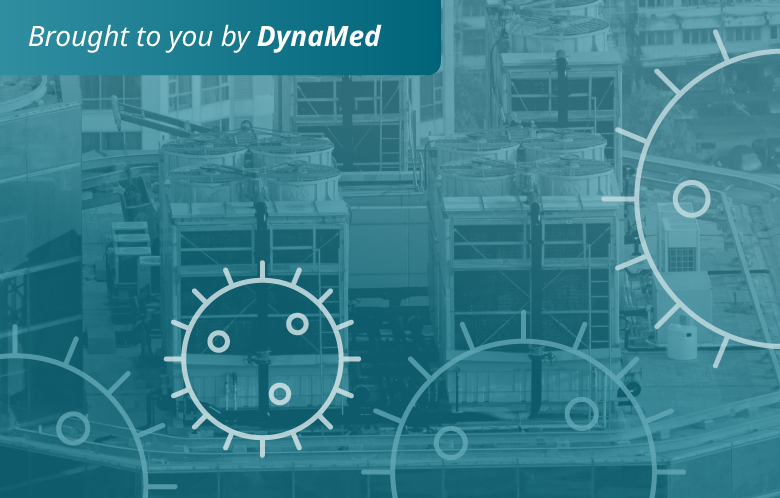
Another outbreak of Legionella infection due to contaminated cooling towers occurred in New York City this summer. The history of Legionella is a fascinating one, but first let’s consider a more recent cause of pneumonia…
In late 2019, physicians in Wuhan, China encountered a spike in cases of a baffling pneumonia. These cases were confusing because the pneumonia didn’t seem to be caused by any of the common bacteria, viruses, or fungi that typically lead to this severe lower respiratory tract infection. This unexplained clinical scenario is known as “pneumonia of unknown origin”. By mid-January 2020, however, the viral etiology of this pneumonia was discovered to be a new (to humans) corona virus.
While COVID is the most recent cause of an outbreak of pneumonia of unknown origin, it is not the only outbreak of pneumonia to lead to the discovery of a new pathogen. Fifty years ago, on the heels of American bicentennial celebrations in Philadelphia in 1976, dozens of people who attended an American Legion convention were struck by severe pneumonia of an unknown cause.
The CDC’s Epidemiologic Intelligence Service (EIS) was called to Philadelphia to investigate. Their early contact tracing efforts and interviews revealed that the potential pathogen was not spreading person-to-person. Instead, it appeared to have originated from a common environmental source tied to the hotel hosting the American Legion celebration. Although some patients were hotel staff and other guests not associated with the convention, the outbreak was declared “Legionnaire’s Disease” due to the connection to the American Legion convention. Ultimately, about 180 people got sick and 29 died in that outbreak.
Unlike the start of the COVID-19 pandemic in 2020 when SARS-CoV-2 was isolated, sequenced, and classified within weeks, it took months for investigators at the CDC to identify the culprit of the outbreak of pneumonia in 1976. Scientists were finally able to isolate a new rod-shaped bacterium, which they named Legionella pneumophila, continuing the eponym for the Legion.
We now know there are many species of Legionella and 16 serogroups of Legionella pneumonophila, though serogroup 1 is reported to cause the majority of pneumonia cases. Legionella live in fresh waters including lakes, ponds, and rivers. Transmission is typically due to inhalation of aerosols from contaminated water storage or distribution systems such as water towers, hot tubs, industrial equipment, domestic plumbing, thermal spas, water outlets, respiratory devices, and nebulizers.
Over the past two summers, two separate outbreaks of Legionnaire’s disease have occurred in New York City. Between July 25 and August 28, 2025, 114 cases of Legionella infection were reported in the Central Harlem neighborhood. Ninety patients required hospitalization and seven people died. That outbreak was tied to cooling towers, and all buildings with towers in the area underwent vigorous cleaning and disinfection before the outbreak was declared over by the end of August.
The Legionella outbreak in 2026 was eerily similar. Between June and July, 92 cases of Legionella infection were reported in New York City, including 79 hospitalizations and seven deaths. This time, residents of the Upper East Side were at risk and 83 buildings with cooling towers were cleaned and disinfected. This outbreak was declared over on July 31.
Legionella infections have risen in the United States over the past several decades and there are several driving factors behind this trend. Climate change impacting temperature, precipitation, and humidity may play a role in the life cycle of the bacteria. Additionally, aging infrastructure in urban cities can contribute to providing a suitable environment for the bacteria to thrive; importantly Legionella grows well in cooling towers, but not in home air conditioning systems, window units, nor vehicle air conditioning. Finally, though ultimately a positive development, greater awareness and improved testing have led to fewer undetected cases.
Be on the lookout for Legionella pneumonia, especially over summer months in urban settings. And check DynaAI for differentiating factors from other pneumonias, diagnostic testing, and antibiotic therapy.