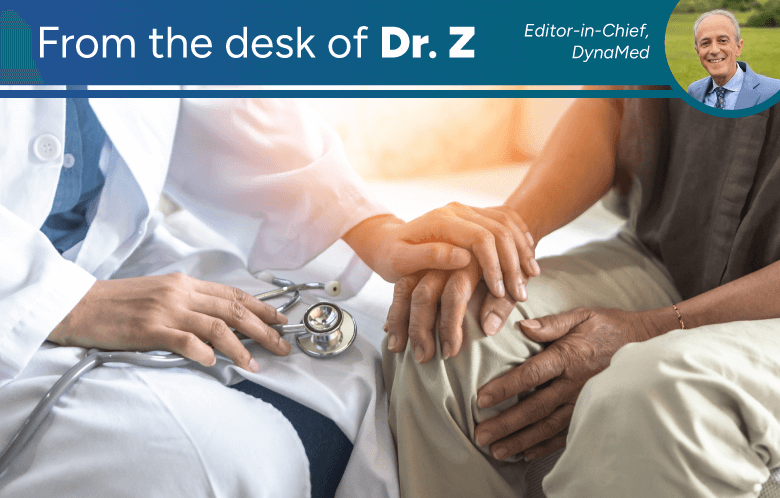
The doctor prescribes one patient a medication for joint pain. She recommends fresh vegetables and daily walks to another. She prescribes medication for insomnia to a third patient who’s not sleeping through the night. Although she only has about twenty minutes for each patient, she spends some of that time hunting and pecking through dense prose searching for up-to-date information on vaccines and screening tests to make sure that her practice is consistent with expert recommendations.
But the guideline panels and experts in the field don’t know her patients or their unique life circumstances and individual needs. And as it turns out too often, neither does she…but she should.
That first patient’s new medication won’t be covered by insurance and costs more than she can afford. The second patient would have to take two buses and travel nearly an hour each way to find fresh vegetables, and it’s not safe to walk in his neighborhood. The medication for the third patient is the one that experts say is the best one for sleep, but not if she’s getting up every two hours to breastfeed.
For the last 40-50 years, technology has made miraculous advances, but at the same time has often hindered clinicians from connecting with their patients. But maybe, just maybe, AI has a chance to give our clinician more time with her patients by helping her to quickly obtain accurate, trustworthy clinical decision support at the point of care instead of when she is charting and coding after the visit. In this way, she can tailor the highest quality evidence to the individual patient in front of her… a patient she now has time to get to know and care for.
Clinicians haven’t always been able to do that, but AI should now make that possible. After all, it’s about time.
Roy Ziegelstein, MD, MACP, Editor-in-Chief, DynaMed
Read more about Dr. Z
Connect with Dr. Z on LinkedIn